Discount rotary knife blade price makes sense only after the cutting method, wood type, blade geometry, material, and required thickness are matched. This guide compares planing knives with rotary cutting knives for veneer, board preparation, surface treatment, and automated production, then shows which specification checks should shape a practical purchase decision.

Match the knife to the cutting movement
The cutting movement determines which blade family fits the job. Planing knives remove wood layer by layer through linear motion, making them suitable for precision thickness processing, decorative veneer production, and surface treatment. Rotary cutting knives rotate logs and cut along the axis for continuous veneer production and veneer substrate preparation.
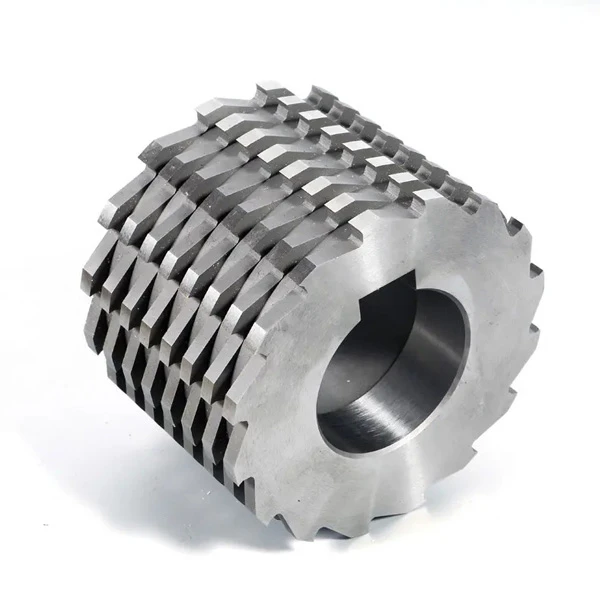
For a workshop producing decorative veneer from hardwood such as oak or teak, a planing knife fits applications that depend on preserving the natural grain. Radial cutting, which follows the vertical wood ring direction, supports veneer stability and reduces deformation risk. Spiral knife pressure planing is suited to fast surface preparation on boards before later processing.
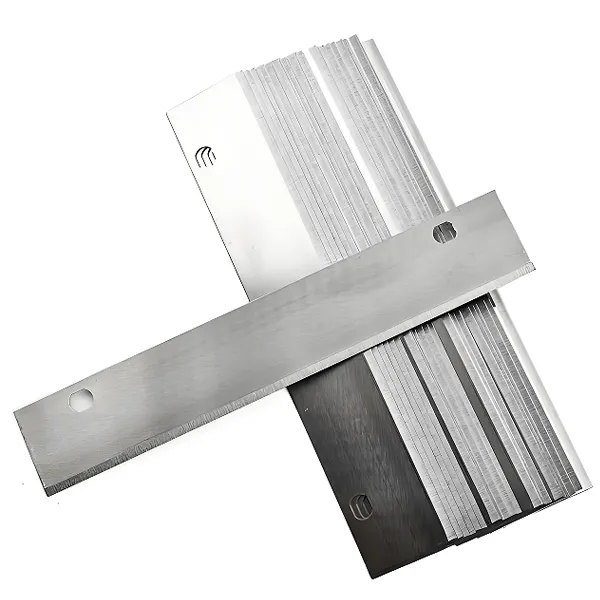
A rotary cutting knife suits continuous production of thin wood veneer from materials such as pine, poplar, and other fast-growing wood. Non-card rotary cutting applies to small-diameter logs, while card rotary cutting applies to large-diameter logs. If the line feeds an automated veneer process, rotary cutting is the relevant blade function to assess.
Compare the working specifications
The following values separate the two choices before you ask for a discount rotary knife blade price:
| Parameter | Planing knife | Rotary cutting knife |
|---|---|---|
| Main material | High speed steel (HRC62), hard alloy coating | Tungsten carbide alloy (YG8-YG15 series) |
| Hardness requirement | HRC58-62 | HRC65-70 |
| Cutting angle | 42-45° | 30-38° |
| Edge geometry | Front angle 15-20°, rear angle 10-15° | Blade edge 22°, installation angle 0.5-3° |
| Blade shape | Short and thick, modular spiral arrangement | Long straight blade with inclination or curvature |
| Core process | Precision machining and surface planing | Continuous peeling of veneer and rotary cutting of logs |
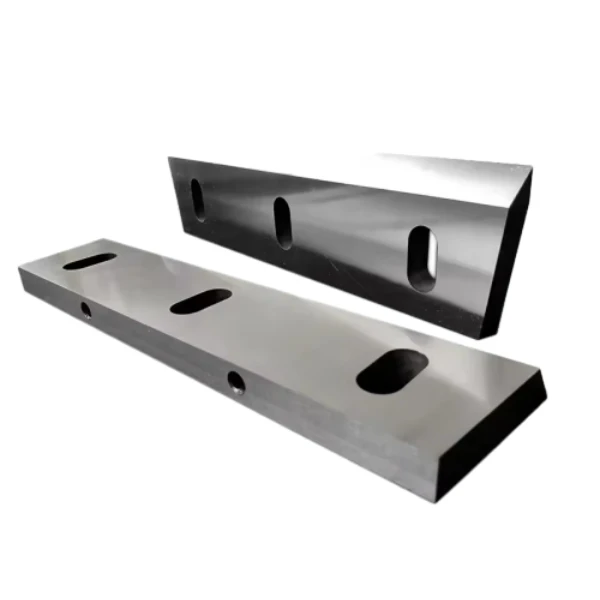
Planing knives balance sharpness with impact resistance at HRC58-62. Their 42-45° standard angle is suited to medium hardwood, while the short, thick shape supports modular spiral arrangements. Choose this configuration when the purchase is driven by surface flatness, controlled thickness, grain appearance, or board pretreatment.
Rotary cutting knives use a lower 30-38° angle to reduce cutting resistance. Their HRC65-70 hardness requirement places more emphasis on wear resistance for continuous peeling. The long straight blade, with inclination or curvature, belongs to log rotation and veneer production. Choose this configuration when the process needs a continuous cut and a target veneer thickness of 0.5-3mm.
Check application fit before comparing price
Price should follow the specification, not replace it. Start with the material being cut and the movement of the machine. Hardwood and artificial board point toward the planing knife selection. Cork, pine, poplar, and fast-growing wood for continuous peeling point toward the rotary cutting knife selection.
The product range supports furniture veneer, wood veneer doors, plywood core layers, composite floors, building structural materials, ship decks, furniture frames, and board pretreatment. Each use still needs the matching blade function. A planing knife belongs to linear surface work and precision thickness control. A rotary cutting knife belongs to log peeling and substrate production.
The intended thickness also narrows the choice. Rotary cutting can produce thin wood veneer with a thickness of 0.5-3mm. Planing knife applications cover sheet processing described from several millimeters to several centimeters, where surface flatness and controlled thickness are important. Use the finished material requirement to prevent a price comparison between blades serving different processes.
For automated processing, the rotary cutting machine can be combined with a CNC system for high-speed, continuous operation. This makes the rotary cutting knife the suitable choice for a veneer processing assembly line. The planing knife remains the better fit for spiral surface planing and precision board preparation.
What to weigh
Your shortlist
Questions to settle before ordering
Which knife suits oak or teak veneer?
A planing knife suits oak or teak when the job requires decorative veneer, surface flatness, or controlled thickness through linear cutting. Its standard 42-45° cutting angle is identified for medium hardwood, and its material options include high speed steel (HRC62) and hard alloy coating. Select the short, thick planing form when the machine uses a modular spiral arrangement.
Which knife produces 0.5-3mm veneer continuously?
A rotary cutting knife is the suitable choice for continuous thin veneer production at 0.5-3mm. The process rotates logs and cuts along the axis, and the blade uses a 30-38° cutting angle to reduce cutting resistance. Non-card rotary cutting applies to small-diameter logs, while card rotary cutting applies to large-diameter logs.
What blade geometry belongs to rotary log cutting?
Rotary log cutting uses a long straight blade with inclination or curvature, a 22° blade edge, and a 0.5-3° installation angle. Tungsten carbide alloy in the YG8-YG15 series is the listed mainstream material, with a hardness requirement of HRC65-70. These values suit continuous peeling and veneer substrate preparation.
Select the specification before the quote
Choose the planing knife for linear thickness control, decorative hardwood veneer, spiral surface planing, and board pretreatment. Choose the rotary cutting knife for continuous peeling, 0.5-3mm veneer, plywood substrate preparation, and automated veneer lines. To request a quote from Changzhou Binsheng Metallurgical Machinery Co., Ltd., send the wood type, cutting movement, target thickness, and machine arrangement.

About the author
The company
Changzhou Binsheng Metallurgical Machinery Co., Ltd.
Changzhou Binsheng Metallurgical Machinery Co., Ltd. stands as a premier manufacturer of industrial cutting blades and precision metal components, strategically positioned in Jiangsu Province's advanced manufacturing cluster within China's Yangtze River Delta economic zone. With two decades of continuous innovation and technical refinement, we have evolved into a technologically sophisticated enterprise recognized for our metallurgical expertise and manufacturing excellence.…
About Us ↗Visit company website ↗