
Blades For Paper Pulping Industry
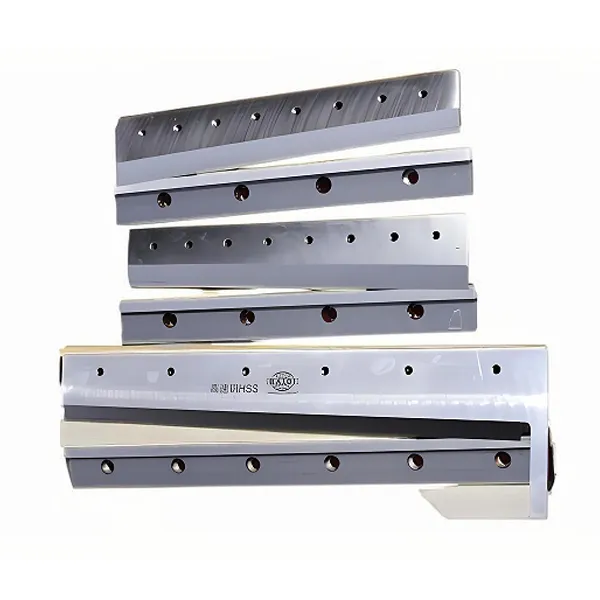
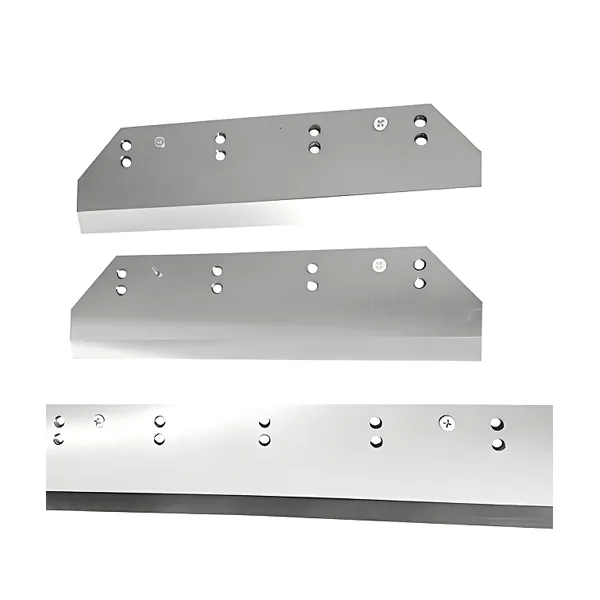
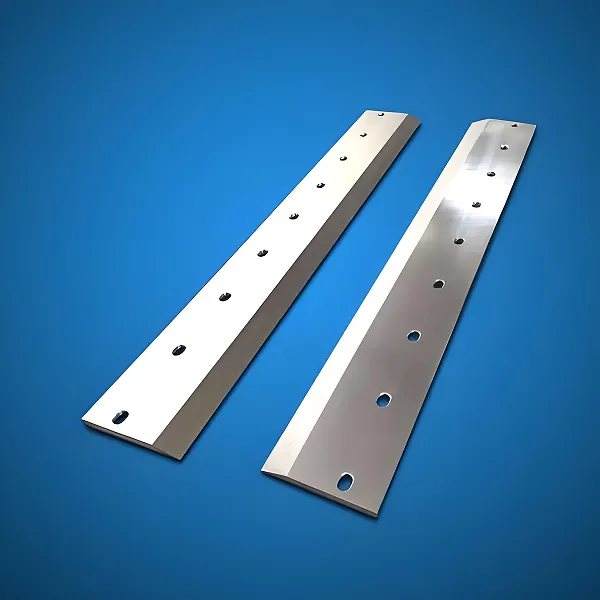
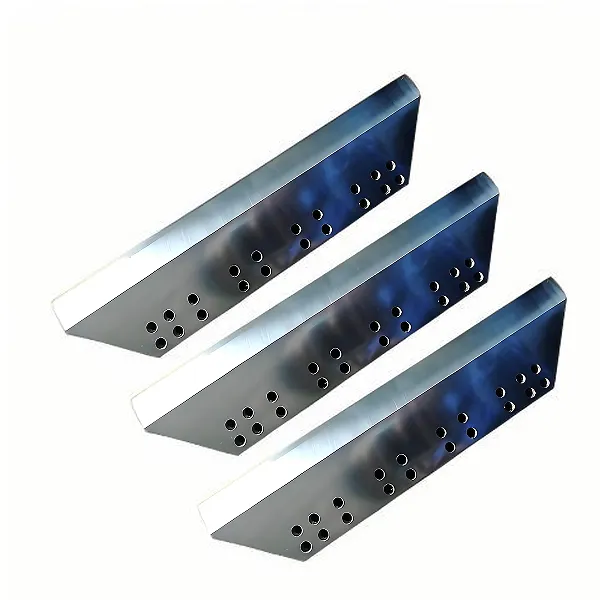
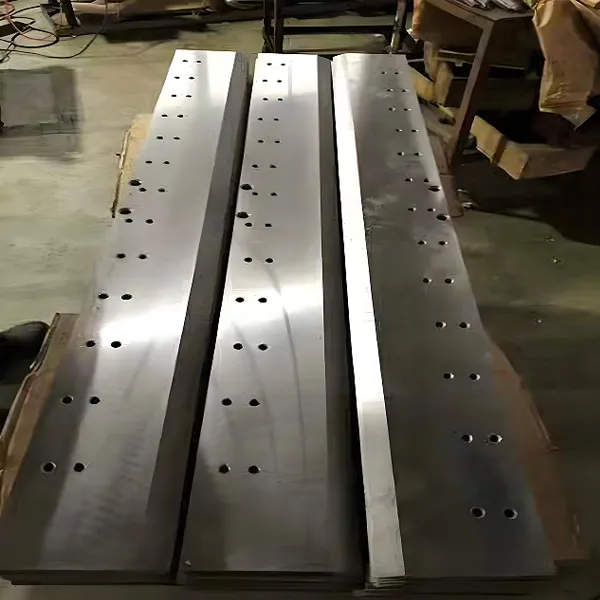
1.Knife ring crusher blade: By high-speed rotating blades (speed 1500-3000rpm), waste paper boxes, newspapers and other materials are crushed into fibrous flocs, with a single machine output of 0.08-1 tons/hour, suitable for recycled pulp production lines.
2.Heavy duty shredder blade: When processing waste cardboard boxes containing plastic film, a multi blade staggered design (shear force ≥ 5000N) is adopted to achieve paper plastic separation purity ≥ 90%, which is suitable for composite packaging material recycling scenarios.
3.Hammer type blade (hardness HRC55-58) can quickly crush tough materials such as copperplate paper and medium grass paper, with pulp impurity rate ≤ 0.5%, suitable for high-strength continuous operation requirements.
4.The jaw crusher utilizes the meshing structure between the moving jaw plate and the stationary jaw plate to process mixed waste paper containing metal impurities, increasing crushing efficiency by 40% and reducing the difficulty of subsequent sorting.
|
Material Type |
Adaptation Scenario |
Performance Advantages |
|
High Speed Steel (Hss) |
High speed precision pulping equipment |
High temperature resistance, sharp cutting edge |
|
Alloy Steel |
Mixed waste paper treatment (including metal impurities) |
Impact resistant and cost-effective |
|
Tungsten Carbide |
High strength waste cardboard crushing |
Ultra long wear-resistant life |
|
Stainless Steel |
Wet environment or corrosive pulp treatment |
Rust proof and corrosion-resistant |
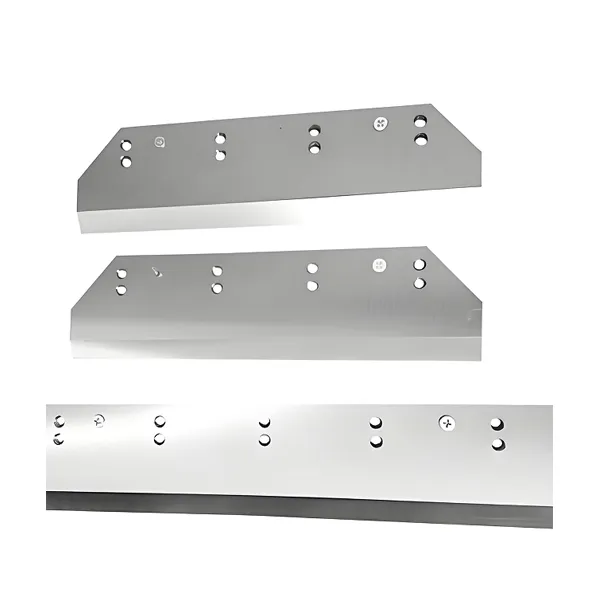
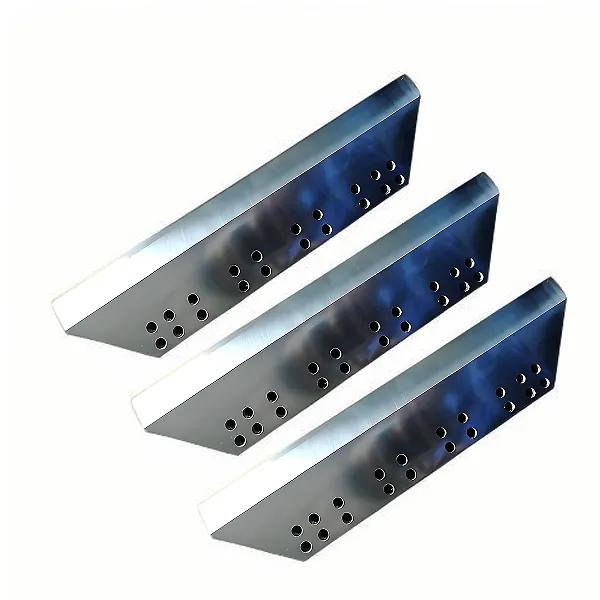
Application of wear-resistant materials:
Cr12MoV alloy steel (hardness HRC58-60) is used for pulping blades, with a wear resistance life of up to 8000 hours and suitable for high-strength operations.
The wear resistance of tungsten carbide coated blades is improved by 50%, which is suitable for the high-speed cutting needs of circular cutting machines.
1.Propeller blade: improves pulping efficiency through a spiral structure, reduces fiber entanglement, and is suitable for industrial grade waste paper processing lines;
2.Claw blade (multi axis): The dual axis/four axis staggered design enhances the tearing effect of cardboard and multi-layer corrugated paper, reducing motor load.
1.Recycled paper manufacturing: The pulping equipment processes waste paper into pulp particles, which are directly used for the production of corrugated paper and box board paper, with a raw material utilization rate increased to 98%.
2.Packaging and printing industry: The round knife slitting machine is compatible with offset printing machines and flexographic printing machines, with a slitting accuracy of ± 0.05mm, meeting the cutting needs of label paper and irregular packaging.
3.In the field of environmental protection treatment: heavy-duty shredders can process mixed waste paper, reducing volume by 70% and transportation costs by 50%, suitable for urban solid waste treatment centers.
1.Rust prevention treatment: Stainless steel blades should be sprayed with food grade rust inhibitor every 48 hours, and alloy steel blades should be regularly cleaned of fiber residues;
2.Wear detection: Check the integrity of the coating on hard alloy blades every month, and replace them immediately if any chipping is found.
Through precise selection and intelligent maintenance, the pulping and cutting blades can significantly improve the efficiency and quality of paper processing, adapting to diverse scenarios ranging from environmentally friendly recycling to high-precision industrial slitting.
crusher blades
hss blades
metal blades
mincer blades
slitter blades
Industrial Pulping Blades FAQs
What are pulping blades for paper industry used for?
Pulping blades for paper industry are mainly used in waste paper recycling, industrial pulp preparation, and pre-treatment of paper materials. They efficiently crush cardboard, newspapers, and other waste paper into fibrous pulp for recycled paper production.
What types of industrial pulping blades are available?
Common industrial pulping blades include knife ring crusher blades, heavy-duty shredder blades, hammer-type blades, propeller blades, and multi-axis claw blades. Each type is designed for specific materials and processing speeds, ensuring high-efficiency paper pulping.
Which materials are suitable for paper pulping knives?
Paper pulping knives are typically made from Cr12MoV alloy steel (HRC58-60), tungsten carbide coated blades, stainless steel, or high-strength tool steel. These materials provide wear resistance, long service life, and suitability for high-strength continuous operation.
How do waste paper pulping blades improve recycling efficiency?
Waste paper pulping blades like multi-axis claw blades and propeller blades improve fiber separation, reduce fiber entanglement, and increase crushing efficiency. This leads to higher raw material utilization (up to 98%) and faster processing in recycled pulp production lines.
Can pulping blades for paper industry handle composite packaging materials?
Yes. Heavy-duty shredder blades with multi-blade staggered designs can process waste cardboard with plastic film, achieving a paper-plastic separation purity of ≥90%, making them ideal for packaging material recycling.
What maintenance is required for industrial pulping blades?
Regular maintenance includes cleaning fiber residues, applying food-grade rust inhibitors to stainless steel blades every 48 hours, and inspecting hard alloy coatings monthly. Timely replacement of chipped blades ensures consistent performance and safety.
How do recycled paper processing blades support environmental protection?
Recycled paper processing blades reduce waste volume by up to 70%, lower transportation costs by 50%, and enable efficient processing in urban solid waste treatment centers. They are crucial for sustainable paper recycling operations.
How do pulping blades improve industrial-grade pulp quality?
Industrial pulping blades such as hammer-type or knife ring crusher blades produce uniform pulp particles (1–5 mm) with low impurity rates (≤0.5%), ensuring high-quality recycled pulp suitable for corrugated paper, boxboard, and other industrial paper products.
Durable Shear Slitting Knives for Precision Material Processing
Our shear slitting knives are designed for high-performance cutting in demanding industrial environments. Featuring specialized tungsten carbide tips and wear-resistant coatings, these knives maintain sharp cutting edges through extended use in continuous operations. Our precision-engineered slitting knives deliver accurate, burr-free cuts while reducing power consumption and material waste. Trusted by converters worldwide, these solutions help optimize production efficiency in metal coil, packaging film, and specialty material processing applications.
-
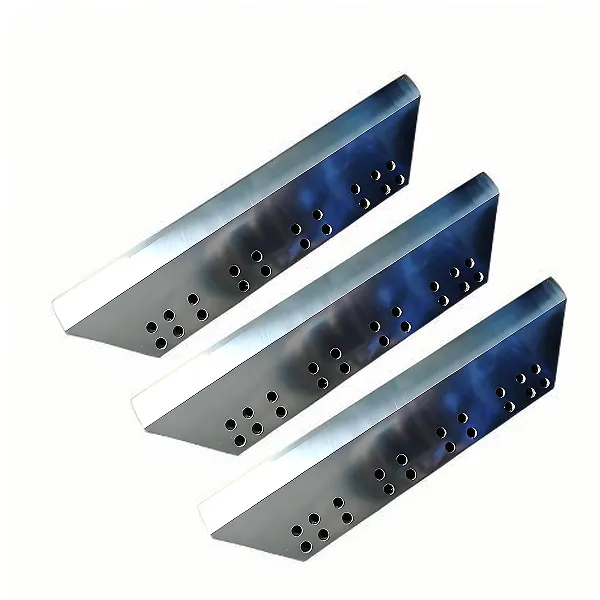 Guillotine Blades For Paper IndustryPaper slitter blades are widely used in basic paper slitting scenes, industrial paper processing and other fields, and can be applied to printing industry, packaging industry and label manufacturing industries. Through material optimization and process innovation, it covers the whole scene slitting needs from basic office paper to high-end industrial paper products.
 -
 Die-Cutting Tool For Paper IndustryDie-cutting tools in paper industry are widely used in the fields of packaging printed matter processing, digital electronic supporting paper products, special paper products processing and industrial packaging materials cooling. Through technical iteration and multi-scene adaptation, they have become the core tools for paper industry to achieve high precision and high efficiency processing.
 -
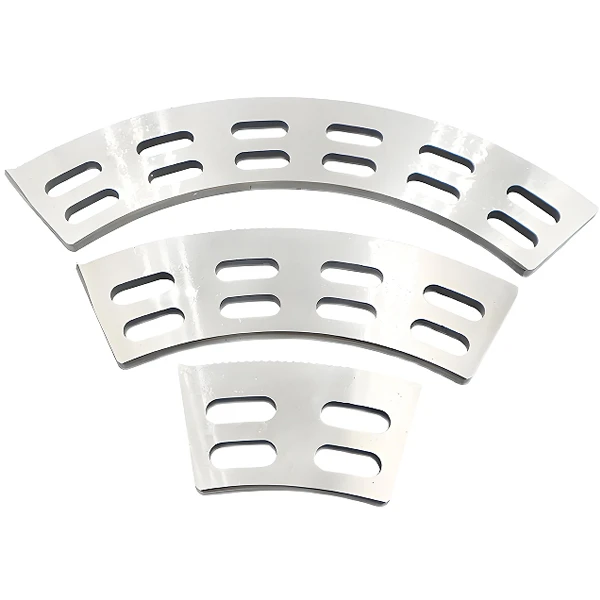 Corrugated Paper Processing BladeCorrugated paper processing blades are used for corrugated paper processing, mostly for batch cutting of special-shaped cartons and gift boxes, as well as cutting of composite films (paper-plastic materials) to meet the diverse needs from packaging cartons to special materials.
 -
 Paper Shredding BladesPulverizing knives in the paper industry are widely used in the fields of waste paper recycling and recycling, industrial production-grade pulp preparation and high-precision specialty paper processing, etc. They are widely used in the production of recycled paper, packaging material recycling and environmental protection treatment, etc. Through diversified knife design and intelligent technology integration, the whole industry chain needs from basic waste paper recycling to high-value paper recycling are covered.
 -
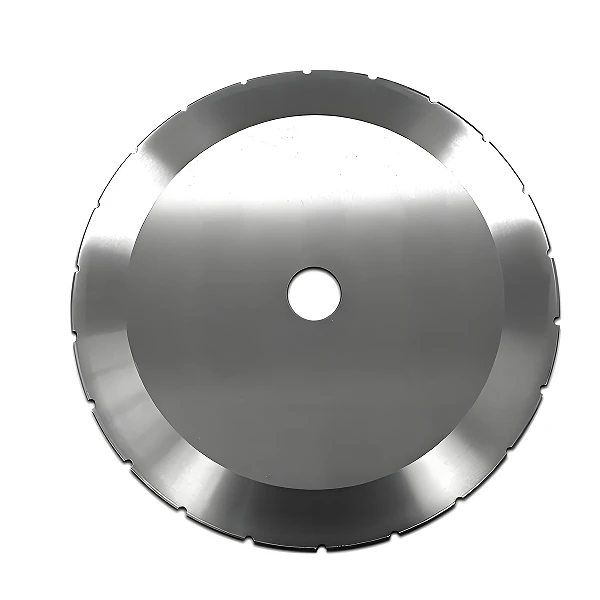 Paper Circular Slitter BladesThrough the combination optimization of shape and material (high speed steel, cemented carbide, etc.), the paper cutter blade can accurately adapt to the diversified cutting needs of printing, packaging and other scenes.
 -
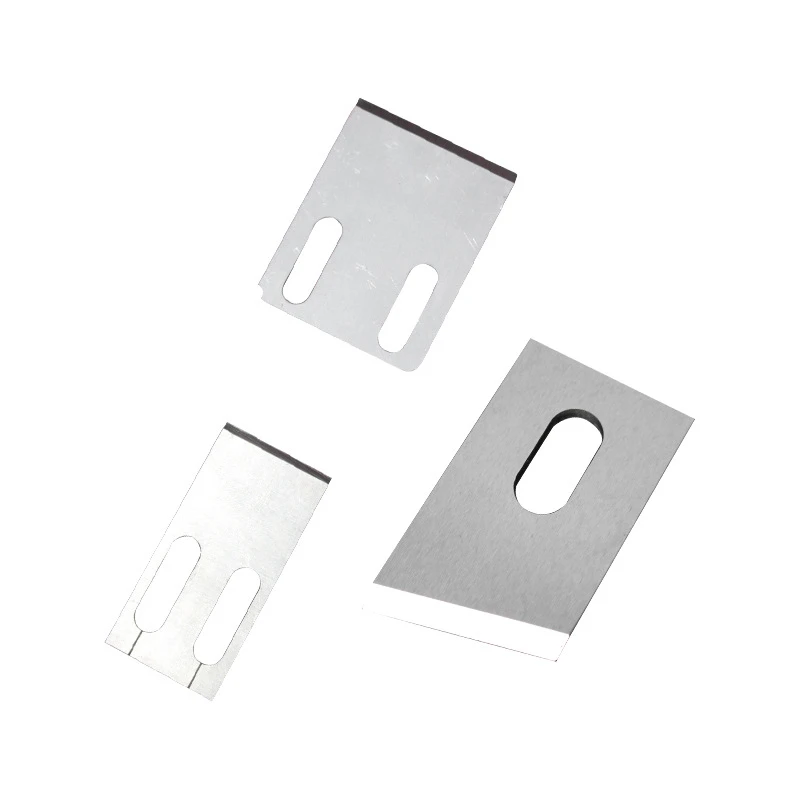 Solid Waste Recycling, Decomposition, And Granulation Machine BladesThe decomposition blade achieves primary crushing and component separation of large solid waste through high-strength materials (alloy steel/hard alloy), while the granulation blade completes particle refinement processing through wear-resistant coating and precision blade design. The two are synergistically applied in fields such as plastic recycling and electronic waste recovery, promoting efficient resource recycling.
 -
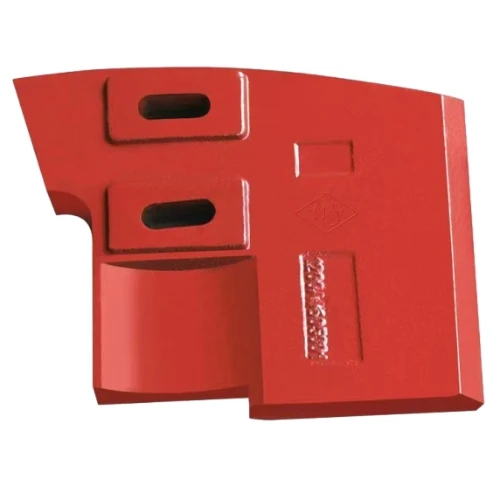 Wear-Resistant Alloy Parts For Concrete MixersMixing Mechanism Components 1.Blades and mixing arms: undertake the core function of material mixing
 -
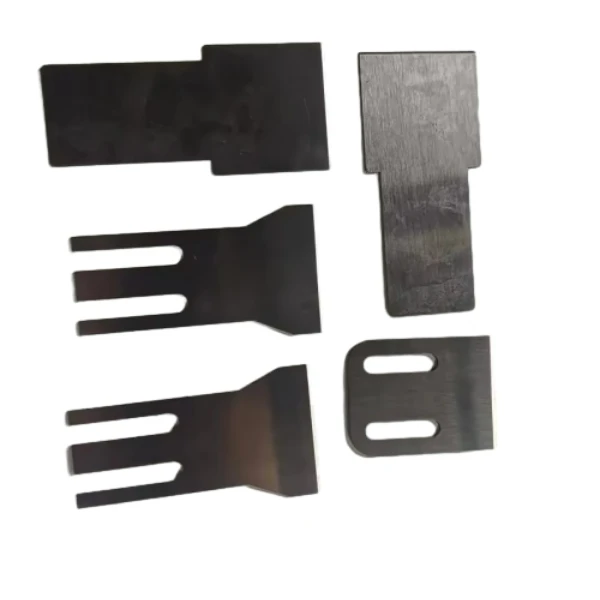 Rubber Granulator BladeThe rubber granulator blade achieves efficient and low-cost large-scale application in rubber recycling and high-value processing through targeted material selection, structural innovation, and scientific maintenance.
Get Binsheng Blade Tech Tips
ISO 9001 insights: industry trends & blade guides


