In the precision world of industrial machining, the half circle router bit stands as a fundamental tool for creating concave profiles and smooth troughs. Whether used in high-end cabinetry, aerospace component molding, or specialized plastic processing, this tool's ability to remove material in a consistent radial arc is indispensable for engineers and craftsmen alike. Understanding the nuances of its geometry and material composition is the first step toward achieving superior surface finishes and operational efficiency.
Globally, the demand for specialized cutting tools has surged as industries move toward more complex, organic designs that traditional straight-edge bits cannot achieve. The half circle router bit bridges the gap between raw material and refined product, providing the necessary curvature for everything from electrical cable channels to decorative architectural molding. As automation and CNC machining become the standard, the reliability of these bits directly impacts production uptime and waste reduction.
By focusing on the intersection of metallurgy and geometry, manufacturers can optimize the lifespan of their tooling and reduce the cost per part. This guide explores the technical specifications, global applications, and future innovations surrounding the half circle router bit, offering a comprehensive resource for professionals looking to enhance their machining precision and long-term sustainability.
Global Industrial Relevance of Half Circle Router Bits
The global manufacturing landscape is currently witnessing a shift toward "precision-driven customization," where the half circle router bit plays a pivotal role. According to ISO standards for cutting tool tolerances, the ability to maintain a perfect radius across thousands of cycles is what separates industrial-grade tooling from consumer-grade equipment. In regions like East Asia and Western Europe, where high-precision machinery dominates the export market, the integration of high-performance routing bits is essential for maintaining competitive edge in the automotive and aerospace sectors.
However, the industry faces a persistent challenge: the trade-off between cutting speed and tool wear. Many manufacturers struggle with premature dulling of the cutting edge when processing dense polymers or hardened composites. By optimizing the geometry of the half circle router bit, companies can significantly reduce downtime and material waste, aligning their operations with global sustainability goals and lean manufacturing principles.
Defining the Half Circle Router Bit and Its Core Function
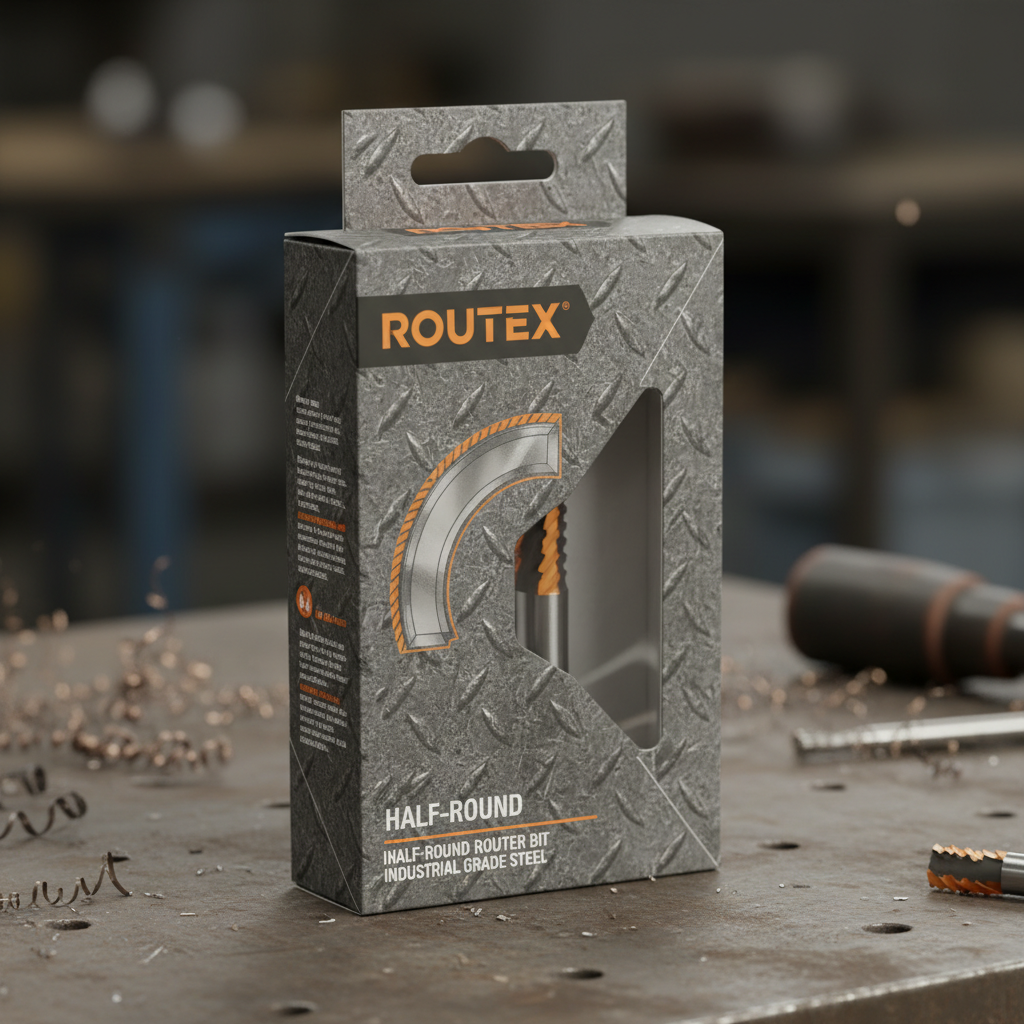
At its most basic level, a half circle router bit (often referred to as a core box bit) is a cutting tool designed to carve a semi-circular groove into a workpiece. Unlike a standard straight bit that creates a flat-bottomed slot, the radial profile of this tool allows for the creation of smooth, U-shaped channels. This geometry is critical for applications where a rounded bottom is required to prevent stress concentrations or to facilitate the fit of cylindrical components.
In the context of modern industry, these bits are more than just "carving tools"; they are precision instruments that enable the production of complex seals, gaskets, and ergonomic handles. For the plastic processing industry, the half circle router bit is essential for creating recessed channels in housing units, ensuring that internal wiring or tubing is protected from external impact while remaining securely seated.
The humanitarian and infrastructure impact is also noteworthy. For instance, in the construction of modular housing or rapid-deployment shelters, the use of these bits allows for the creation of interlocking joints that are structurally superior to simple butt joints. By utilizing the curved profile of the half circle router bit, engineers can create snap-fit mechanisms that allow for faster assembly in disaster-prone areas without compromising the integrity of the structure.
Critical Performance Factors for Tool Longevity
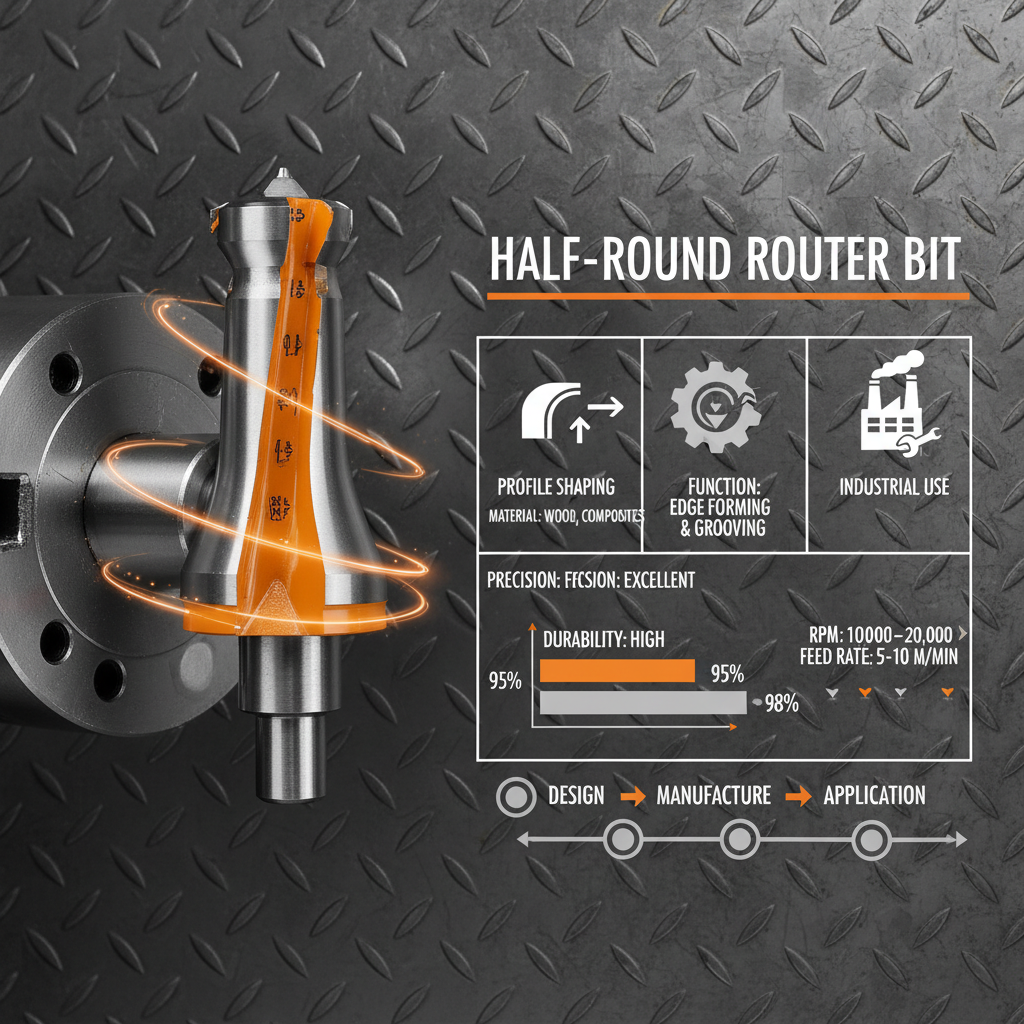
The effectiveness of a half circle router bit is primarily determined by its material composition. Carbide-tipped bits are the industry standard for high-volume production due to their extreme hardness and resistance to heat, which prevents the cutting edge from rounding off during prolonged use in abrasive materials like reinforced plastics or hardwoods.
Beyond material, the "chip evacuation" capability is a critical factor. Because a half circle router bit creates a closed-bottom groove, sawdust or plastic shavings can easily become trapped, leading to friction, overheating, and eventually "burning" the workpiece. High-quality bits feature optimized flute designs that push debris upward and outward, ensuring the cutting edge remains cool.
Finally, scalability and precision centering are paramount. An industrial-grade half circle router bit must maintain a concentric rotation to avoid "chatter marks" on the interior of the curve. This requires rigorous quality control during the grinding process, ensuring that the radial axis of the bit is perfectly aligned with the shank.
Comparative Analysis of Material Compatibility
Different materials require different approaches to routing. When using a half circle router bit on softwoods or plastics, the focus is on maintaining a clean edge without melting the material. In contrast, when working with dense composites or metals, the priority shifts to heat dissipation and tool toughness to prevent chipping.
The balance between feed rate and spindle speed is the key to maximizing the ROI of your tooling. A bit that is pushed too hard in a dense material will fail prematurely, while a bit that rotates too fast in plastic will cause thermal deformation.
Material Efficiency Rating for Half Circle Router Bit Types
Real-World Global Applications and Use Cases
The half circle router bit finds extensive use in the global furniture industry, particularly in the production of traditional joinery and modern ergonomic designs. From creating the "scoops" in wooden tool handles to carving the recessed channels for upholstery padding, these bits allow designers to incorporate organic shapes that improve user comfort and aesthetic appeal.
In more specialized industrial zones, such as aerospace manufacturing hubs in Toulouse or Seattle, the half circle router bit is used to route precision channels in composite panels for the placement of wiring looms. These channels must be perfectly uniform to ensure that the wiring does not experience friction-induced wear over the aircraft's lifespan, demonstrating how a simple geometric tool contributes to aviation safety.
Strategic Advantages and Long-Term Value
Investing in high-quality half circle router bit solutions offers tangible economic benefits. While a premium carbide bit may have a higher initial cost, its extended lifespan reduces the frequency of tool changes and the associated labor costs. More importantly, the consistency of the cut reduces the need for secondary sanding or finishing operations, streamlining the entire production pipeline.
From a sustainability perspective, the use of precision-engineered bits minimizes material waste. When a half circle router bit performs a clean cut without tearing the grain or melting the plastic, the scrap rate drops significantly. This not only saves on raw material costs but also reduces the environmental footprint of the manufacturing facility.
Beyond the logic of cost and efficiency, there is the element of trust and reliability. For a manufacturer, knowing that every piece coming off the CNC machine is identical ensures brand consistency. The half circle router bit provides the reliability needed to guarantee that parts produced in different factories across the globe will fit together perfectly.
Future Trends in Routing Technology and Innovation
The future of the half circle router bit is being shaped by the advent of "smart tooling." We are seeing the integration of sensors within the tool holder that can monitor vibration and heat in real-time, alerting operators before a bit fails. This transition toward predictive maintenance will virtually eliminate unplanned downtime in high-speed routing environments.
Additionally, new coating technologies, such as AlTiN (Aluminum Titanium Nitride), are being applied to the half circle router bit to further enhance heat resistance. These nano-coatings allow for significantly higher cutting speeds without degrading the cutting edge, which is essential as the industry moves toward faster, more automated production cycles.
Finally, the push toward "green manufacturing" is leading to the development of biodegradable materials that are easier to machine. The half circle router bit will need to evolve to handle these new bio-polymers, which may have different melting points and chip-forming characteristics than traditional petroleum-based plastics.
Technical Comparison of Half Circle Router Bit Specifications
| Material Grade |
Wear Resistance |
Recommended RPM |
Application Focus |
| Standard Carbide |
High |
16k - 22k |
Hardwoods & Plastics |
| Micro-Grain Carbide |
Very High |
18k - 24k |
Precision Aerospace |
| PCD (Diamond) |
Extreme |
12k - 18k |
Non-ferrous Metals |
| HSS (High Speed Steel) |
Medium |
10k - 14k |
Softwoods & Prototypes |
| Coated Carbide |
High+ |
16k - 20k |
Abrasive Composites |
| Cobalt Alloy |
Medium-High |
12k - 16k |
General Industrial |
FAQS
While both create a curved groove, a half circle router bit is specifically designed to create a true semi-circular profile where the depth is exactly half of the width (the radius). Round-nose bits may have varying ratios of depth to width. Choosing the correct one depends on whether you need a perfect half-circle for a fitting component or a shallower, rounded trough for aesthetic purposes.
Burning usually occurs due to friction from accumulated chips. To prevent this, ensure you are using a half circle router bit with an efficient flute design for chip evacuation. Additionally, lower your spindle speed and increase your feed rate so the tool doesn't dwell in one spot, and consider using a vacuum system to clear debris instantly from the groove.
Yes, carbide half circle router bits can be sharpened, but they require specialized diamond grinding wheels to maintain the exact radial geometry. Attempting to sharpen them with standard grinders often ruins the half-circle profile, leading to uneven cuts. We recommend professional regrinding services to ensure the tool returns to its original ISO specifications.
For high-volume industrial plastic processing, PCD (Polycrystalline Diamond) tipped half circle router bits are the gold standard. They offer the highest wear resistance and the cleanest finish, significantly reducing the number of tool changes required. For mid-range production, micro-grain carbide is a more cost-effective yet highly durable alternative.
The radius should be determined by the component that will fit into the groove. If you are routing a channel for a 10mm cable, a half circle router bit with a 5mm radius (10mm diameter) is appropriate. Always account for a small tolerance (e.g., 0.1mm to 0.2mm) to ensure the part fits smoothly without excessive force.
Yes, but safety precautions differ. In a CNC, the half circle router bit is held in a rigid collet with precise feed control. In a handheld router, the user must be cautious of "climb cutting," which can cause the tool to pull violently. Always move the router against the rotation of the bit to maintain control and ensure a smooth finish.
Conclusion
The half circle router bit is a cornerstone of precision machining, enabling the transition from flat surfaces to complex, curved geometries across a multitude of industries. From the meticulous requirements of aerospace wiring channels to the aesthetic demands of high-end cabinetry and the efficiency of plastic processing, the radial precision of this tool ensures both structural integrity and visual excellence. By understanding the critical balance of material choice, heat management, and chip evacuation, manufacturers can maximize tool life and drastically reduce production waste.
Looking forward, the integration of smart sensors and advanced nano-coatings will further elevate the performance of routing technology, making the half circle router bit more durable and efficient than ever before. For companies striving for a competitive edge in global manufacturing, investing in high-precision tooling is not just a technical choice, but a strategic business decision that drives quality and sustainability. Visit our website to find the perfect tooling solutions for your needs: www.bsblade.com